微信公众号


The ortholog of human ssDNA-binding protein SSBP3 influences neurodevelopment and autism-like behaviors in Drosophila melanogaster
Safa Salim, Sadam Hussain, Ayesha Banu, Swetha B. M. Gowda, Foysal Ahammad, Amira Alwa, Mujaheed Pasha, Farhan Mohammad
https://doi.org/10.1371/journal.pbio.3002210
Abstract
1p32.3 microdeletion/duplication is implicated in many neurodevelopmental disorders-like phenotypes such as developmental delay, intellectual disability, autism, macro/microcephaly, and dysmorphic features. The 1p32.3 chromosomal region harbors several genes critical for development; however, their validation and characterization remain inadequate. One such gene is the single-stranded DNA-binding protein 3 (SSBP3) and its Drosophila melanogaster ortholog is called sequence-specific single-stranded DNA-binding protein (Ssdp). Here, we investigated consequences of Ssdp manipulations on neurodevelopment, gene expression, physiological function, and autism-associated behaviors using Drosophila models. We found that SSBP3 and Ssdp are expressed in excitatory neurons in the brain. Ssdp overexpression caused morphological alterations in Drosophila wing, mechanosensory bristles, and head. Ssdp manipulations also affected the neuropil brain volume and glial cell number in larvae and adult flies. Moreover, Ssdp overexpression led to differential changes in synaptic density in specific brain regions. We observed decreased levels of armadillo in the heads of Ssdp overexpressing flies, as well as a decrease in armadillo and wingless expression in the larval wing discs, implicating the involvement of the canonical Wnt signaling pathway in Ssdp functionality. RNA sequencing revealed perturbation of oxidative stress-related pathways in heads of Ssdp overexpressing flies. Furthermore, Ssdp overexpressing brains showed enhanced reactive oxygen species (ROS), altered neuronal mitochondrial morphology, and up-regulated fission and fusion genes. Flies with elevated levels of Ssdp exhibited heightened anxiety-like behavior, altered decisiveness, defective sensory perception and habituation, abnormal social interaction, and feeding defects, which were phenocopied in the pan-neuronal Ssdp knockdown flies, suggesting that Ssdp is dosage sensitive. Partial rescue of behavioral defects was observed upon normalization of Ssdp levels. Notably, Ssdp knockdown exclusively in adult flies did not produce behavioral and functional defects. Finally, we show that optogenetic manipulation of Ssdp-expressing neurons altered autism-associated behaviors. Collectively, our findings provide evidence that Ssdp, a dosage-sensitive gene in the 1p32.3 chromosomal region, is associated with various anatomical, physiological, and behavioral defects, which may be relevant to neurodevelopmental disorders like autism. Our study proposes SSBP3 as a critical gene in the 1p32.3 microdeletion/duplication genomic region and sheds light on the functional role of Ssdp in neurodevelopmental processes in Drosophila.
1p32.3微缺失/重复与许多神经发育障碍有关,如发育迟缓、智力残疾、自闭症、小头畸形和畸形等表型。1p32.3染色体区域包含几个对发育至关重要的基因;然而,它们的验证和表征仍然不足。一种这样的基因是单链DNA结合蛋白3(SSBP3),其果蝇直系同源物被称为序列特异性单链DNA结合蛋白质(Ssdp)。在这里,我们使用果蝇模型研究了Ssdp操作对神经发育、基因表达、生理功能和自闭症相关行为的影响。我们发现SSBP3和Ssdp在大脑的兴奋性神经元中表达。Ssdp过表达导致果蝇翅膀、机械感觉刷毛和头部的形态学改变。Ssdp操作也影响幼虫和成年苍蝇的神经胶质体积和神经胶质细胞数量。此外,Ssdp过表达导致特定大脑区域突触密度的差异性变化。我们观察到,在Ssdp过表达的苍蝇头部,armadillo的水平降低,在幼虫翼盘中,Armadillio和无翼表达减少,这表明经典Wnt信号通路参与了Ssdp的功能。RNA测序揭示了Ssdp过表达苍蝇头部氧化应激相关途径的紊乱。此外,Ssdp过表达的大脑显示出活性氧(ROS)增强、神经元线粒体形态改变以及分裂和融合基因上调。Ssdp水平升高的苍蝇表现出焦虑样行为增强、决策能力改变、感官感知和习惯性缺陷、社交互动异常和进食缺陷,这些在泛神经元Ssdp敲低的苍蝇中都有表现,表明Ssdp对剂量敏感。在Ssdp水平正常化后,观察到行为缺陷的部分挽救。值得注意的是,Ssdp仅在成年苍蝇中被敲除不会产生行为和功能缺陷。最后,我们发现Ssdp表达神经元的光遗传学操作改变了自闭症相关行为。总之,我们的研究结果提供了证据,证明染色体1p32.3区的剂量敏感基因Ssdp与各种解剖、生理和行为缺陷有关,这些缺陷可能与自闭症等神经发育障碍有关。我们的研究提出SSBP3是1p32.3微缺失/重复基因组区的关键基因,并阐明了Ssdp在果蝇神经发育过程中的功能作用。
···
Feeding assay
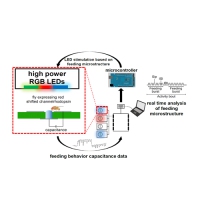
To assess the feeding parameters of the flies, the FlyPAD system was used [87]. Flies were starved overnight (16 to 20 h) on 0.8% agarose at 21°C. The following day, individual flies were placed in the FlyPAD arenas, loaded with melted 25 mM sucrose in 0.8% agarose. The feeding behavior was recorded for 1 h at 25°C. Data analysis was performed using FlyPAD software in Matlab (Mathworks) [63,87].