Neuroendocrine control of intestinal regeneration through the vascular niche in Drosophila
André B. Medina et al.
Highlights
•Compartmentalized regulation of Dh31 hormone refines intestinal regeneration
•Enteroendocrine and neuronal Dh31 activate Dh31 receptor in gut-associated trachea
•Dh31/Dh31R signaling leads to VEGF-like Pvf1 production within trachea
•Pvf1/Pvr signaling influences intestinal stem cell and tracheal plasticity
Dh31激素的分区调节可促进肠道再生
肠内分泌和
神经元Dh31激活肠道相关气管中的Dh31受体
Dh31/Dh31R信号传导导致气管内VEGF样Pvf1的产生
Pvf1/Pvr信号传导影响肠干细胞和气管可塑性
Summary
Robust and controlled intestinal regeneration involves reciprocal interactions between the intestinal epithelium and its microenvironment. Here, we identify signaling between enteroendocrine (EE) cells, vasculature-like trachea, and neurons, which drives regional and global stem cell proliferation during adult intestinal regeneration in Drosophila. Reactive oxygen species (ROS) from midgut cells promote production and secretion of diuretic hormone 31 (Dh31), from anterior midgut EE cells. EE and neuronal Dh31 activate tracheal Dh31 receptor, leading to the production of the vascular endothelial growth factor (VEGF)- and platelet-derived-growth-factor (PDGF)-like ligand Pvf1. Pvf1 induces tracheal remodeling and intestinal stem cell (ISC) proliferation through autocrine and paracrine Pvr/mitogen-activated protein kinase (MAPK) signaling, respectively. While EE Dh31 exerts broad control of ISC proliferation throughout the midgut, effects of the neuronal source of the ligand appear restricted to the posterior midgut. Collectively, our work discovered an EE/neuronal/vascular signaling network, controlling global and domain-specific ISC proliferation during adult intestinal regeneration.
强健且受控的肠道再生涉及肠道上皮与其微环境之间的相互作用。在这里,我们确定了肠内分泌(EE)细胞、血管样气管和神经元之间的信号传导,这些信号传导在果蝇成年肠再生过程中驱动了区域和全局干细胞增殖。中肠细胞的活性氧(ROS)促进中肠前EE细胞产生和分泌利尿激素31(Dh31)。EE和神经元Dh31激活气管Dh31受体,导致血管内皮生长因子(VEGF)和血小板衍生生长因子(PDGF)样配体Pvf1的产生。Pvf1分别通过自分泌和旁分泌Pvr/丝裂原活化蛋白激酶(MAPK)信号传导诱导气管重塑和肠干细胞(ISC)增殖。虽然EE Dh31对整个中肠的ISC增殖具有广泛的控制作用,但配体的神经元来源的影响似乎仅限于中肠后部。总的来说,我们的工作发现了一个EE/神经元/血管信号网络,在成人肠道再生过程中控制着全局和域特异性ISC增殖。
···
Food consumption analysis
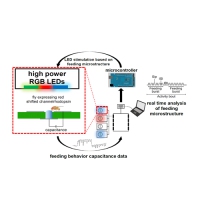
Total food consumption in mated females was measured using
FlyPad devices.
76 For total food consumption, flies were given a mix of 10% yeast and 7% glucose mixed in 1% agarose. Food consumption was calculated based on number sips on food provided for 1 hour. All experiments were done in 29°C incubators. Flies were fed on normal fly food prior to the experiment. No starvation was done prior to the
FlyPad experiments.
使用
FlyPad装置测量交配雌性的总食物消耗量
.76 对于总食物消耗,给果蝇喂食10%酵母和7%葡萄糖混合在1%琼脂糖中的混合物。食物消耗量是根据1小时内提供的食物的小口数计算的。所有实验均在29°C的孵化器中进行。在实验之前,果蝇被喂食正常的果蝇食物。在FlyPad实验之前没有进行饥饿实验。
For analysis of feeding post infection, flies were fed sucrose or infected with Pe (OD600=50) for 16 hours prior to fly feeding measurements as detailed above.
 微信公众号